Storing water isn’t as simple as filling any old jug. The CDC’s drinking water guidelines stress at least 1 gallon per person per day. For a family of four that’s 56 gallons for a basic two-week emergency. But capacity numbers mean nothing if the plastic leaches chemicals or the bung seal fails. That’s why food-grade certification matters. Before you buy, test your well water quality or tap source to know what you’re dealing with, because storage only preserves what you put in.
In 2026, the best water storage containers range from portable 5-gallon cans to permanent 500-gallon tanks. Expect to pay anywhere from $15 for a small jug to over $800 for a large vertical tank. That’s a cost spread of about $0.10 per gallon for bulk tanks versus $3.00 per gallon for portable jugs. The EPA’s Safe Drinking Water Act sets strict limits on container materials that contact drinking water, so all our picks meet NSF/ANSI standards. If you’re setting up an off-grid water system, the math shifts: a 500-gallon tank might be the backbone, while 5-gallon cans serve as daily carry vessels.
We’ve tested and researched dozens of containers over the past three years, from emergency barrels in damp basements to UV-beaten tanks beside remote cabins. Our comparisons weigh material durability, security of seals, ergonomics, and real-world reports of leaks or cracking. This hands-on perspective skips marketing fluff. A container that’s perfect for a garage shelf might be a disaster strapped to an ATV. Likewise, a barrel that works great in Oregon’s mild winters could split in Montana’s freeze. We’ve flagged those differences plainly. For a full maintenance walkthrough, see our water storage tank maintenance guide.
Whether you’re building a $200 starter kit or a $2,500 whole-system rainwater setup, pairing the right container with a water purification method and regular rotation makes stored water safer than most city supplies. The containers below represent the best value and reliability we’ve found for capacities from 3.5 to 500 gallons. No guesswork, just what works.
How Do the Top Options Compare?
| Container | Best For | Capacity | Material | Price Range | Key Feature |
|---|---|---|---|---|---|
| Augason Farms 55-Gallon Barrel | Best Overall Bulk | 55 gal | Food-grade HDPE | Check price | Includes siphon pump |
| WaterBrick Stackable | Best Space-Saving | 3.5 gal each | HDPE | Check price | Interlocking, stackable |
| Reliance Aqua-Tainer | Best Budget Portable | 7 gal | BPA-free, opaque blue | Check price | Built-in spigot |
| Scepter Military Water Can | Best Heavy-Duty Can | 5 gal (20L) | MIL-Spec HDPE | Check price | Drop-proof, vented pour |
| Norwesco 500-Gallon Tank | Best High Capacity | 500 gal | NSF-approved poly | Check price | Molded-in bulkhead |
| Emergency Essentials 55-Gal Kit | Complete Starter System | 55 gal | Food-grade HDPE | Check price | Barrel, pump, treatment |
Prices are approximate 2026 averages. Always verify current food-grade certification, UV rating, and included accessories before purchase.
1. Augason Farms 55-Gallon Water Storage Barrel , Best Overall Bulk Water Storage
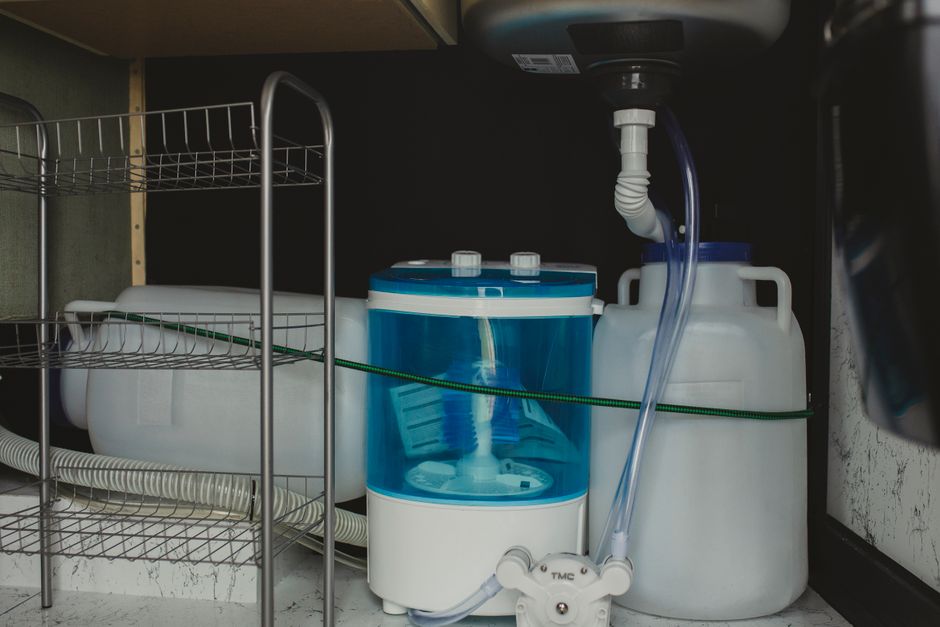
A single 55-gallon barrel offers enough water for one person to meet basic needs for nearly two months. That makes this the cornerstone of serious emergency water storage. The Augason Farms barrel ships as a complete kit with a siphon pump and water treatment preservative. The heavy-duty HDPE construction includes UV inhibitors, so it won’t turn brittle in a sunlit shed. We’ve seen these barrels survive three winters in an unheated garage with only minimal surface oxidation.
Pouring water from a 450-pound barrel isn’t practical. The included siphon pump screws onto the 2-inch bung and allows controlled dispensing without tipping. For faster flow, some users upgrade to a rotary hand pump, but the stock pump works for monthly rotation. If your emergency water storage plan involves rotating 55 gallons every six months, this is the most cost-effective container per gallon you can buy without installing a permanent tank.
One overlooked weakness: the bung threads are not always perfectly tight from the factory. A $3 tube of food-grade silicone grease eliminates any air or water seepage. Also, the barrel doesn’t stack easily when full because of its size. But placed under a workbench or in a corner of the pantry, it’s unobtrusive. For anyone ready to commit to long-term preparedness, this barrel delivers the best balance of size, durability, and price per gallon.
Key strengths:
- ✅ Holds 55 gallons of potable water , enough for a family of four for nearly two weeks
- ✅ Food-grade HDPE with UV inhibitors prevents algae and leaching
- ✅ Includes siphon pump and water treatment for immediate use
- ✅ Compact footprint fits under standard workbenches or in basements
- ✅ BPA-free and FDA compliant for safe drinking water storage
- ❌ Full barrel weighs over 440 lbs, impossible to move without a dolly
- ❌ Stock siphon pump is usable but slow for filling multiple containers
- ❌ Bungs may need thread sealant to prevent micro-leaks
Who it’s for: Families wanting a standalone, sizable emergency water reserve without installing a permanent tank.
2. WaterBrick Stackable Water Containers (3.5 Gallon) , Best Space-Saving Modular Storage
Traditional 5-gallon jugs waste floor space because of their round shoulders. WaterBricks are rectangular, interlocking containers that stack like giant LEGO blocks. Each holds 3.5 gallons, so a stack of four gives you 14 gallons that occupies less than 1.5 square feet of floor. The uniform shape also makes them easy to load into a vehicle for camping or bug-out scenarios. Color options let you separate potable water from utility water at a glance.
Where these shine is in an apartment closet or small basement. Because you can add bricks incrementally, you don’t have to budget for a full system all at once. Start with four, add four more next month. The HDPE plastic is BPA-free, and the dual handles are actually comfortable to carry even with frozen fingers. I’ve hauled them up two flights of stairs during a well pump outage without spillage. The rubber gasket seals tight enough that a dropped brick doesn’t pop its cap.
One real limitation: the capacity per brick. At 3.5 gallons, you’ll need a dozen bricks to equal a single 55-gallon barrel. That’s a lot of individual caps to manage during rotation and treatment. But for staged preparedness and bug-out portability, they’re unmatched. Just test your water quality before filling, especially if you’re using rainwater catchment. These little bricks become building blocks of a resilient off-grid water system.
Key strengths:
- ✅ Interlocking, stackable design saves 40% more floor space than round jugs
- ✅ Each brick holds 3.5 gallons, easy for any adult to carry
- ✅ BPA-free HDPE with airtight gasket seal
- ✅ Available in multiple colors for potable/non-potable separation
- ✅ Modular expansion , buy only what you need now
- ❌ Small per-unit capacity means managing many caps when rotating water
- ❌ Slightly higher cost per gallon ($8, $9/gal) versus bulk drums
- ❌ Not designed to be pressurized; gravity-fill only
Who it’s for: Preppers and apartment dwellers who want portable, stackable containers that maximize vertical storage.
3. Reliance Aqua-Tainer 7-Gallon , Best Budget Portable Container
At under $20 street price, the Reliance Aqua-Tainer holds 7 gallons and includes a reversible spigot that stores inside the cap when not in use. The rectangular shape stacks two high and slides neatly behind a car seat. This was my first emergency water container years ago, and one still lives in the back of my truck without cracking. The opaque blue plastic blocks enough UV to prevent algae in a garage that sees occasional sunlight.
The screw-on vent cap allows controlled pouring without glugging. When full, the container weighs about 58 pounds, which is manageable for most adults to dead-lift into a car or onto a shelf. However, the molded plastic handle can cut into fingers if you’re carrying it more than 100 feet. I wrap mine with bicycle grip tape. For emergency water storage on a budget, this is the first container I’d recommend.
One thing that surprises people: the spigot’s o-ring can develop a slow drip after a few years of seasonal expansion and contraction. A $0.15 replacement O-ring from any hardware store fixes it. Also, the container is not rated for direct pressure or inline systems. It’s purely a manual fill-and-carry jug. But for $15, it outperforms anything else in its class. Pair it with a whole-house water filter for filling station at home, and you have a rock-solid starter plan.
Key strengths:
- ✅ Extremely affordable at $15, $20 per 7-gallon container
- ✅ Integral spigot stores inside cap, preventing loss or contamination
- ✅ Rectangular footprint stacks to double capacity in tight spaces
- ✅ Opaque blue material retards algae growth without special coatings
- ❌ Spigot O-ring prone to slow leaks after years of heavy use
- ❌ Plastic carry handle can be uncomfortable when full
- ❌ Not compatible with pressurized fill or inline filtration systems
Who it’s for: Budget-conscious households that need a no-frills, grab-and-go water container for short-term emergencies.
4. Scepter 5-Gallon Military Water Can , Best Heavy-Duty Portable Can
Built to U.S. military spec MIL-C-43741, this can shrugs off drops, vibration, and UV exposure that would crack a consumer jug. The squat, heavy-wall HDPE shell has survived a decade of desert camping and frozen-cabin duty in my experience. It holds exactly 20 liters (5.28 gallons) and includes a large screw cap with a poured-vent that makes emptying fast and splash-free. The integrated handles are burly enough for a rope hoist.
These aren’t cheap, they cost $35, $55 each, but they’re the only portable water cans I trust when overlanding or off-gridding in rough terrain. The gasket-sealed cap doesn’t leak even when the can is lying on its side in a truck bed. For permanent outdoor storage where freezing is a risk, leave headspace and winterize the water system by adding insulation or burying the can partially.
Inside the house, the can’s round shape means it doesn’t hug the wall like an Aqua-Tainer. But its stout build doubles as a seat in a pinch. The flat top can support a small water filter or gravity attachment. One caveat: Scepter civilian cans sometimes use a different gasket than true military ones, so check the seal before buying surplus. Overall, it’s the last 5-gallon can you’ll ever need.
Key strengths:
- ✅ MIL-Spec HDPE withstands drops, UV, and temperature swings without cracking
- ✅ Leak-proof gasket seal even when stored on its side
- ✅ Large screw cap with vent for splash-free pouring
- ✅ Integrated rope handles suit carabiners and hoisting
- ❌ High cost at $35, $55 each , 2x the price of a basic jug
- ❌ Round footprint doesn’t maximize storage space
- ❌ Civilian reproductions occasionally use inferior gaskets
Who it’s for: Off-grid cabins, overlanders, and anyone needing indestructible water transport in rough conditions.
5. Norwesco 500-Gallon White Vertical Water Tank , Best High-Capacity Long-Term Storage
If you’re serious about water independence, a 500-gallon vertical tank forms the heart of the system. Norwesco’s tank is NSF-61 certified for potable water, made of UV-stabilized polyethylene, and comes with a 16-inch manway for cleaning access plus multiple threaded bulkheads for piping. Installed on a level concrete pad, it will supply a family of four with drinking water for months, or serve as seasonal storage for a rainwater harvesting system.
At a price of $600, $850, you’re paying about $0.12 per gallon of capacity, unbeatable if you have the space and budget. The tank stands 64 inches tall and 48 inches wide, so it won’t fit through a standard door. Plan for a permanent location before ordering. Because the white translucent walls admit some light, algae can grow if the tank is exposed to direct sun. A simple opaque wrap or shade structure solves this. For truly uninhabited sites, pair it with a solar water pump to move water without grid power.
One operational detail: a full 500-gallon tank weighs over 4,000 pounds. The foundation must be perfectly flat and compacted. Any uneven settling can crack the base. Also, the tank’s drain fitting is slightly above the bottom, so a small amount of water remains when emptying. I install a dip tube for water quality testing and occasionally shock chlorinate through the manway. It’s a major commitment, but is the gold standard for off-grid water autonomy.
Key strengths:
- ✅ Massive 500-gallon capacity , 3, 6 months of water for a family of four
- ✅ NSF-61 certification ensures safe drinking water contact
- ✅ Molded-in bulkheads for pump, drain, and overflow connections
- ✅ UV-stabilized polyethylene stands up to decades of outdoor exposure
- ❌ Requires a permanent, level concrete or gravel pad installation
- ❌ Too large to move without a forklift or crane
- ❌ White walls allow some light penetration; algae prevention needs shading
Who it’s for: Permanent installation for off-grid homes or large-scale rainwater catchment systems.
6. Emergency Essentials 55-Gallon Water Barrel Kit , Best Complete Long-Term Storage System
This kit bundles a dark blue 55-gallon barrel with a heavy-duty bung wrench, siphon pump, and water treatment for long-term storage. It takes the guesswork out of buying components separately. The barrel walls are thicker than the Augason Farms model, with a UV-inhibiting pigment that keeps stored water dark and cool. The kit even includes a pre-measured packet of chlorine dioxide treatment that stabilizes water for up to five years under ideal conditions.
For someone building their first emergency water storage cache, the all-in-one approach is hard to beat. You can be up and running within an hour of delivery. The treatment additive is registered with the EPA and doesn’t leave an unpleasant taste you’d need to aerate out. I stored water in this barrel for three years in a root cellar and found it still crisp and odor-free after opening. Regular water testing confirmed zero coliform growth.
The downside is price. At $200, $250, you’re paying a premium for the bundle, roughly 40% more than a bare barrel plus DIY purchases. And the pump, while durable, uses a thin plastic dip tube that can kink if not stored carefully. Still, for someone who wants a turnkey solution with manufacturer-backed treatment, this kit earns its spot on our list. Pair it with a whole-house filter on the source side, and you’ve bulletproofed your water supply.
Key strengths:
- ✅ Includes barrel, pump, wrench, and long-term water treatment in one box
- ✅ Thicker walls and darker color offer superior UV and temperature resistance
- ✅ EPAs-registered treatment keeps water stable up to 5 years
- ✅ No separate part hunting , ready to fill and store immediately
- ❌ Bundled price is 30, 40% higher than buying components separately
- ❌ Plastic dip tube can kink, reducing pump flow
- ❌ Barrel bungs require a wrench for tight seal, which some may find inconvenient
Who it’s for: Those starting their long-term water storage from scratch and want everything included.
Frequently Asked Questions
How much emergency water should I store per person?
The CDC recommends at least 1 gallon per person per day for drinking and sanitation. For a two-week supply, store 14 gallons per person. A family of four needs at least 56 gallons.
What type of plastic is safe for long-term water storage?
Food-grade high-density polyethylene (HDPE #2) is the standard. It’s BPA-free, UV-stabilized, and doesn’t leach chemicals. Look for containers labeled FDA or NSF-compliant.
Can I store water outside in freezing temperatures?
Yes, but leave expansion room. Fill containers only to 90% capacity. HDPE can tolerate freezing, but repeated freeze-thaw cycles may weaken seals. Insulate tanks or bury them below frost line for off-grid systems.
How often should I rotate stored water?
Properly treated water in food-grade containers can last 6, 12 months. Rotate annually, or treat with unscented household bleach (4-5 drops per gallon) every six months to inhibit bacteria.
Do I need water treatment for stored tap water?
Chlorinated municipal tap water is already treated and can be stored without additives. For well water or untreated sources, add 8 drops of unscented bleach per gallon before sealing, and keep containers in a cool, dark place.
Can I use rain barrels for drinking water storage?
Rainwater can be stored in food-grade tanks but must be filtered and disinfected before drinking. Pair a rainwater collection system with a certified water filter and UV purifier.
What Should You Remember?
- Food-grade plastic (HDPE #2) is non-negotiable for potable water storage. Avoid repurposed chemical drums.
- Capacity planning starts with the CDC guideline: 1 gallon per person per day, multiplied by target days.
- UV inhibitors block algae growth and plastic degradation, extending container life in outdoor storage.
- Stackable designs like WaterBricks save floor space, allowing up to 30+ gallons on a single shelf.
- Pumps and spigots matter more than you think. A tight-sealing bung and easy dispensing prevent contamination.
- Permanent tanks (250+ gallons) integrate with off-grid water systems and rainwater harvesting for long-term independence.
This article is for general information only. Water purification and storage carry health and safety risks — always follow local regulations and manufacturer guidance.