An atmospheric water generator (AWG) pulls moisture straight from the air and turns it into clean drinking water. This technology offers a lifeline for off-grid homes, arid regions, and emergency preparedness. As climate shifts and water scarcity grows, more households explore AWG systems as a primary or backup water source. The biggest question on everyone’s mind is simple: what does it really cost?
In this guide, we break down real AWG prices for 2026. You will see the cost per liter, upfront investment, and ongoing expenses. We compare these figures against bottled water, well water, and rainwater harvesting. Our numbers reflect current market data and electricity rates so you can make a confident decision.
All AWG units we discuss are designed to produce water that meets stringent EPA drinking water standards. They use multi-stage filtration and often carry WQA certification. Whether you live off-grid or just want to cut reliance on municipal water, an AWG may fit your plan. Let’s dive into the numbers.
| Water Source | Cost per Liter (2026) | Upfront Investment | Notes |
|---|---|---|---|
| Residential AWG | Check price | Check price | Depends on humidity and electricity rate |
| Bottled Water | Check price | Check price | Expensive over time; plastic waste |
| Well Water (Drilled) | Check price | Check price | Requires well drilling and water testing |
| Rainwater Harvesting | Check price | Check price | System cost plus filtration |
| Municipal Tap Water | Check price | Check price | Not available off-grid |
How Does an Atmospheric Water Generator Work?
An atmospheric water generator works by condensing humidity from the air. It pulls air over cooled coils, much like a dehumidifier. Water droplets collect in a tank. Then the water passes through a series of filters: sediment, carbon, and often a UV or reverse osmosis stage. The result is clean drinking water that meets EPA and CDC guidelines.
The process requires electricity to power the compressor and fans. Energy use varies widely. A high-efficiency unit can produce a liter of water using as little as 0.3 kWh. In dry climates, that number can rise to 1 kWh or more. That’s why location is critical. We explore how this affects cost per liter later.
Most residential units produce between 10 and 50 liters per day. For off-grid setups, solar-powered AWGs are becoming more common. You can pair an AWG with a solar panel kit to avoid grid dependence. If you’re curious about the technology’s step-by-step process, check our full AWG guide.
- Air is drawn in and cooled to the dew point.
- Moisture condenses on coils and drips into a collection tray.
- Water passes through sediment and carbon filters.
- Optional UV light or RO membrane kills any remaining microbes.
- Final product is stored in a built-in or external tank.
What Factors Influence Atmospheric Water Generator Prices?
AWG prices are not one-size-fits-all. Several factors push costs up or down. Understanding these will help you size a unit correctly and avoid overspending. Capacity is the biggest driver. A small countertop unit making 5-10 liters per day costs far less than a whole-house system. Brand reputation and build quality also matter. Established manufacturers include patented filtration and energy recovery tech. That premium shows up in the price.
Operating conditions play a hidden role. If you live in a humid area, you can buy a smaller, cheaper unit. In arid regions, you’ll need a unit designed to work at low humidity, which costs more. These units use desiccant wheels or higher compressor power. Expect to pay 30-50% more for low-humidity capability. Additional features like hot/cold water dispensers, Wi-Fi monitoring, or automatic self-cleaning also increase the price tag.
Installation costs vary. Some residential units are plug-and-play. Others require a dedicated 220V outlet or a plumbed drain line. If you need an electrician or plumber, add $200 to $800 to the upfront bill. For off-grid solar integration, budget another $1,000 to $3,000 for panels and a battery bank. You can learn more about off-grid water systems in our complete off-grid guide.
- Water production capacity (liters per day).
- Humidity range the unit is designed to handle.
- Filtration technology (carbon, RO, UV, mineral addition).
- Brand and warranty coverage.
- Installation complexity and electrical requirements.
How Much Does an Atmospheric Water Generator Cost in 2026?
In 2026, you can find a basic portable AWG for as little as $800. These compact units make 5 to 10 liters daily and are great for tiny homes or emergency kits. Mid-range residential units producing 20-30 liters per day range from $1,500 to $3,500. They are the sweet spot for most off-grid households. For a family of four needing 40-50 liters, plan on spending $3,500 to $5,500.
Large commercial or whole-house AWGs that produce 100+ liters per day can cost $8,000 to $15,000 or more. These often integrate with a home’s plumbing and include a pressure tank. At the top end, solar-integrated models with lithium batteries reach $20,000. But they deliver true energy independence. The Water Quality Association (WQA) certifies many of these units to NSF/ANSI standards, so you know the output is safe.
It’s useful to compare these costs to other water independence solutions. A drilled well can run $5,000 to $15,000 before treatment equipment. A good well water test alone costs $200 to $500. With a well, you also need pumps and pressure tanks. A comprehensive well drilling guide breaks down those numbers. For some, an AWG is actually cheaper over a 10-year horizon, especially where well drilling isn’t feasible.
- Portable/countertop: $800 - $1,500 (5-15 L/day).
- Mid-range residential: $1,500 - $3,500 (20-35 L/day).
- Large residential: $3,500 - $5,500 (40-60 L/day).
- Commercial/whole-house: $8,000 - $20,000 (100+ L/day).
What Is the Cost Per Liter of Water from an AWG?
The cost per liter is the real measure of long-term affordability. It combines electricity, filter replacements, and maintenance. Energy is the dominant factor. The average U.S. residential electricity rate in 2026 is around $0.14 per kWh. An efficient AWG draws 0.35 kWh to make one liter. That gives an energy cost of just under $0.05 per liter. In less humid conditions, consumption can reach 0.7 kWh, pushing energy cost to $0.10 per liter.
Filter cartridges need replacement every 6 to 12 months. A set of sediment, carbon, and UV lamp costs $100 to $200 annually. For a unit making 20 liters daily, that’s about 7,300 liters per year. Filter cost adds roughly $0.014 to $0.027 per liter. Maintenance visits or DIY labor are minimal. Some units require a coil cleaning every few months, a task that takes minutes.
Add it all up: in a moderate humidity zone, total cost per liter lands between $0.08 and $0.12. In dry areas, it rises to $0.15 or even $0.25 per liter. For context, a 500 ml bottled water from a store costs $0.50 to $2.00. That’s $1 to $4 per liter. An AWG pays for itself quickly if you otherwise buy bottled water. Even compared to delivery services, the AWG wins over time. The CDC confirms that properly filtered atmospheric water is safe, and many users prefer the taste after a mineral filter adds back essential minerals.
- Electricity: $0.04 - $0.14 per liter (depending on humidity and energy rate).
- Filter replacement: $0.01 - $0.03 per liter.
- Maintenance: negligible if performed by owner.
- Total: $0.08 - $0.25 per liter for typical residential units.
How Does AWG Water Cost Compare to Bottled Water and Other Sources?

To see the full picture, stack AWG water against other common sources. The table above summarizes the cost per liter and upfront investment. Bottled water is wildly expensive by volume. A family of four consuming 2 liters each per day spends $1,460 to $5,840 a year on bottled water. That same water from an AWG would cost $290 to $730 annually, even with electricity. The device pays for itself within two to four years.
Well water is cheaper per liter, but the initial drilling and equipment costs are steep. You also need to test your water regularly, as private wells are not regulated by the EPA. A reliable test kit or lab analysis is essential. A poorly maintained well can introduce bacteria or heavy metals. AWG water, in contrast, exits the machine already filtered and often UV sterilized. That’s a significant safety advantage.
Rainwater harvesting has a similar profile: moderate initial cost, very low ongoing cost. But it requires adequate rainfall and proper storage tank maintenance. In droughts, you get no water. An AWG runs as long as humidity exists, which is reliable in many regions. For off-grid living, combining an AWG with rainwater collection often provides the best reliability. If you’re building a system from scratch, see our rainwater harvesting guide for a full breakdown.
What Are the Hidden Costs of Owning an Atmospheric Water Generator?
No purchase is without hidden expenses. For AWGs, the first is shipping and installation. Large units can weigh over 100 pounds. Freight shipping adds $200 to $500. Installing a dedicated circuit or plumbing a drain line might require a professional. Budget for that.
Electricity usage spikes in dry air. If you live in a desert, the unit will struggle at the edges of its operating range. You may need to pre-humidify the incoming air, adding to the power bill. Filter life also shortens in dusty environments. That increases the per-liter cost. Warranty coverage varies. Some brands cover only the compressor, not the control board or sensors. Read the fine print.
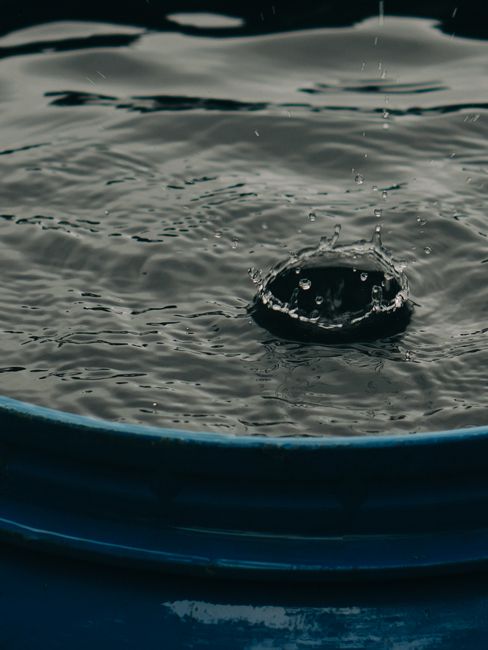
Finally, consider water storage. Most AWGs have a built-in tank of 8 to 12 liters. That’s not enough for a full day’s demand. You’ll need extra containers. A 55-gallon water storage drum costs $100 to $200 and protects your supply. Clean and sanitize containers every few months to prevent biofilm. This simple step keeps your water meeting EPA standards for disinfected water.
- Shipping and professional installation: $200-$800.
- Increased electricity use in low humidity.
- More frequent filter changes in dusty climates.
- Additional water storage containers and maintenance.
Frequently Asked Questions
Is an atmospheric water generator worth the initial cost?
For off-grid homes or areas with expensive bottled water, yes. The payback period is often 2 to 4 years compared to purchasing bottled water. The convenience and independence add value beyond pure dollars.
How much electricity does an atmospheric water generator use?
An efficient residential AWG uses between 0.3 and 0.7 kWh per liter, depending on humidity. At the U.S. average electricity rate of $0.14 per kWh, energy cost ranges from $0.04 to $0.10 per liter.
Will an atmospheric water generator work in low humidity?
Yes, but less efficiently. Most units operate best above 40% relative humidity. Below 30%, water output drops and energy consumption rises sharply. Specialized low-humidity models exist but cost more.
Can I use an atmospheric water generator off-grid?
Absolutely. Many off-grid users pair an AWG with a solar panel array and battery storage. Just ensure your system is sized to handle the AWG’s wattage. Some manufacturers sell pre-built solar AWG bundles.
How do I maintain an atmospheric water generator?
Maintenance is straightforward. Replace air and water filters every 6 to 12 months. Clean the condenser coils every 3 to 6 months with a soft brush or vacuum. Sanitize the water tank regularly.
Does water from an AWG taste different from tap water?
Atmospheric water has very low mineral content, so it can taste flat to some people. Many AWGs include a mineral cartridge that adds calcium and magnesium for a crisp, fresh taste similar to spring water.
What Should You Remember?
- Real AWG prices in 2026 range from $800 for portable units to over $20,000 for whole-house solar-integrated systems.
- The cost per liter typically falls between $0.08 and $0.25, far cheaper than bottled water.
- Electricity is the largest operating cost, averaging $0.05 to $0.10 per liter under normal conditions.
- AWGs produce water that meets EPA and WQA standards when properly maintained.
- Pairing an AWG with solar panels creates a fully off-grid water source with zero recurring fuel costs.
- An AWG pays for itself in 2-4 years when replacing bottled water for a family of four.
- Consider hidden costs like shipping, installation, and water storage containers before buying.
This article is for general information only. Water purification and storage carry health and safety risks — always follow local regulations and manufacturer guidance.