Only 2.5% of the Earth’s water is fresh, and much of that is locked in glaciers or deep aquifers. For coastal communities, islands, and arid regions, the ocean represents an almost unlimited source of water , if you can remove the salt. Desalination does exactly that. Over the past two decades, it has grown from a niche technology into a global industry that supplies drinking water to more than 300 million people. According to the International Water Association, desalination capacity exceeded 100 million cubic meters per day in 2023, and that number is climbing fast.
This guide breaks down how desalination works, what separates a home countertop unit from a city-scale plant, and what you can expect to pay. We also look at the environmental trade-offs and the safety of desalinated water. Whether you’re researching an off-grid water system for a coastal homestead or simply curious about the technology that keeps cruise ships and island resorts supplied, you’ll find clear, data-backed answers here. I’ll reference standards from the CDC, EPA, and WHO so you know the water coming out of these systems is truly safe.
| Aspect | Home System | Industrial Plant |
|---|---|---|
| Typical capacity | 50, 200 gallons per day (GPD) | 5, 100+ million gallons per day (MGD) |
| Primary technology | Single-stage reverse osmosis | Multi-stage RO with energy recovery |
| Feedwater | Seawater or brackish beach well | Seawater, brackish aquifer, or recycled brine |
| Energy use per gallon | 0.015, 0.025 kWh | 0.011, 0.023 kWh |
| Cost per gallon (total) | Check price | Check price |
| Brine handling | Drain to sewer or ground; no permit typically | Regulated ocean outfall with diffusers |
| Maintenance frequency | Pre-filters every 3, 6 months, membrane every 2, 4 years | Continuous chemical dosing, annual membrane replacement cycles |
| System lifespan | 10, 15 years with proper care | 25, 30+ years, often rebuilt in place |
What Is Desalination and How Does It Work?

At its core, desalination is the process of separating dissolved salts and other minerals from saline water. The goal is to reduce total dissolved solids (TDS) from a starting point of 35,000-45,000 mg/L in seawater , or 1,500-15,000 mg/L in brackish groundwater , down to below 500 mg/L, the level most international guidelines consider palatable and safe.
There are two families of desalination technology: thermal and membrane. Thermal methods boil saline water and condense the pure vapor, leaving salts behind. Multi-stage flash distillation and multi-effect distillation are common in the Middle East, often paired with power plants that supply waste heat. However, water purification methods have increasingly shifted toward membrane-based reverse osmosis (RO). RO forces seawater through semi-permeable membranes at pressures of 800-1,000 psi. The membranes reject more than 99% of dissolved salts, bacteria, and viruses. Modern energy-recovery devices can capture pressure from the concentrate stream and reuse it, cutting energy consumption dramatically.
A typical home RO desalinator runs on the same principle but at a much smaller scale. It uses a high-pressure pump, a set of spiral-wound membranes, and a flow restrictor on the brine line. Some units incorporate pre-filters for sediment and chlorine, plus a post-treatment remineralization cartridge. The entire system often fits under a sink or in a small mechanical closet. For anyone exploring alternatives like atmospheric water generators, RO desalination offers a steady, predictable output that doesn’t depend on humidity.
- Seawater TDS: 35,000-45,000 mg/L; brackish water: 1,500-15,000 mg/L
- RO membranes reject 99%+ of salts, requiring 800-1,000 psi for seawater
- Energy recovery devices can reduce energy use by 40-60% compared to older systems
How Do Home Desalination Systems Compare to Industrial Plants?
The most obvious difference is scale. A home desalinator typically produces 50 to 200 gallons per day (189-757 liters) , enough for a household of 4-8 people if water is used efficiently. A medium-sized industrial plant, like the Carlsbad facility in California, produces around 50 million gallons per day. The technology inside is similar, but the way it’s engineered and operated is worlds apart.
Home units are designed for simplicity. They often run on standard 110/220V electricity, use disposable pre-filters, and send brine to the household drain. The membranes last 2-4 years with proper maintenance. Industrial plants run 24/7 with multiple stages, chemical dosing, and sophisticated monitoring. Their brine must meet strict discharge permits. Where a homeowner might throw a pre-filter in the trash, a large plant must manage tons of chemical sludge.
When considering water security, it helps to compare alternatives. Drilling a well on coastal property can be risky due to saltwater intrusion. A whole-house water filter cannot remove dissolved salts, so it’s not a substitute. Desalination fills a gap that no other technology can , it literally makes undrinkable water safe. The table below summarizes key differences.
What Does a Home Desalination System Cost?
The initial purchase price for a quality home RO desalinator ranges from $2,000 to $6,000, depending on capacity, brand, and features like automatic flushing or onboard monitoring. Many marine-grade units are on the higher end, built for saltwater cruising and continuous duty. Add another $500-$1,200 for professional installation if you’re not a confident DIY plumber. After the initial setup, you’ll spend roughly $0.10 to $0.30 per gallon of product water, taking into account electricity, membrane replacement, and pre-filter changes.
For comparison, packaged bottled water delivered to your door often costs more than $1.00 per gallon. So even a premium desalination setup pays for itself within a few years in an off-grid scenario where trucking in water is the only other option. The electricity cost is the biggest variable. A unit that makes 150 GPD might draw 1.5-2.0 kWh per hour during operation. At a national average of $0.15/kWh, that’s roughly $0.10-$0.15 per gallon for power alone. Pairing the system with solar can drop the operational cost to near zero, but you have to size the array and solar pump appropriately.
Once you’re producing water, you’ll need safe, sanitary water storage containers to hold the output. Some systems come with a small pressurized tank, but for daily household use, a 100-300 gallon food-grade storage tank is common. Regular well water testing principles apply here too , you should test your desalinated water quarterly to ensure membrane integrity and post-treatment are doing their job.
- Home RO desalinator purchase: $2,000, $6,000
- Installation: $500, $1,200
- Operating cost: $0.10, $0.30 per gallon, driven by electricity
- Solar pairing can eliminate the power cost
What Are the Environmental Impacts of Desalination?
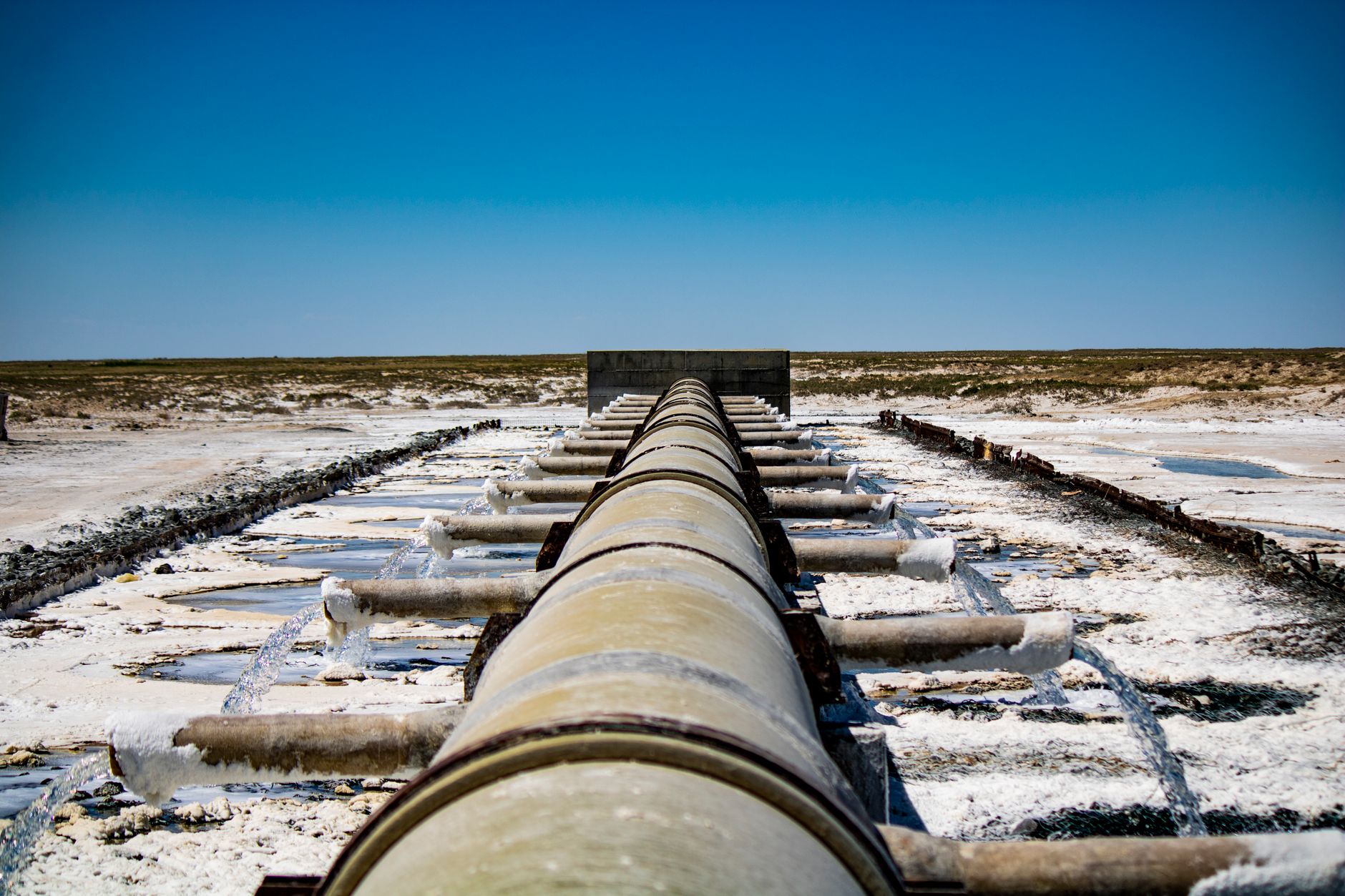
Desalination solves one problem but creates others. The most significant is brine discharge. For every gallon of fresh water a plant produces, it also creates about 1-1.5 gallons of concentrate that is roughly twice as salty as the original seawater. When this brine is returned to the ocean without proper dilution, it can create high-salinity plumes that damage marine ecosystems. Intake pipes also suck in and kill plankton, fish larvae, and other organisms , a problem called impingement and entrainment.
Energy consumption is the second major concern. According to the global trade group, membrane SWRO plants now use 3-6 kWh per cubic meter (about 0.011-0.023 kWh per gallon), down from 8-12 kWh just 20 years ago. Still, a large plant can have the same carbon footprint as tens of thousands of cars if powered by fossil fuels. That’s why many new projects, especially in Australia and the Middle East, are pairing desalination with solar or wind farms.
There’s a growing body of research on minimizing these impacts. Zero liquid discharge systems capture all brine and extract commercially useful salts, though they remain expensive. Subsurface intake galleries, like those under the ocean floor, can virtually eliminate marine life entrainment. The WHO and other global bodies continue to update guidelines on brine management, and some countries now require real-time salinity monitoring around outfalls. For a homeowner, the environmental footprint is tiny compared to an industrial plant , but it’s still worth following local codes for brine disposal, never dumping concentrate near sensitive habitats.
- Brine volume: 1, 1.5 gallons per gallon of fresh water produced
- Energy use: 3, 6 kWh per cubic meter for modern seawater RO
- Subsurface intakes can avoid marine life entrainment
- Zero liquid discharge systems are emerging but costly
Is Desalinated Water Safe to Drink?
Yes, when the system is correctly designed and maintained. The RO process removes virtually all bacteria, viruses, heavy metals, and dissolved salts. The product water typically has a TDS of 10-100 mg/L, far below the 500 mg/L secondary standard set by the EPA for aesthetics and the WHO guideline for palatability. However, extremely low mineral content can make the water taste flat and, over long periods, may strip minerals from your body if not remineralized. Most home systems include a calcite or mineral cartridge that adds back calcium and magnesium to achieve a balanced pH and pleasing taste.
It’s also important to test your water. The membrane is a physical barrier, but it can develop pinholes or tears. A water testing guide will walk you through checking TDS, conductivity, and pH at regular intervals. The CDC advises that any private water source , including desalinated water , be tested annually for coliform bacteria and other contaminants. A simple handheld TDS meter can give you a daily sanity check; if the reading jumps from 50 to 500, it’s time to troubleshoot the membrane.
Beyond minerals, you should be aware of boron. Seawater naturally contains boron, and a standard RO membrane only rejects about 60-80% of it. The EPA has a health advisory level for boron of 1.4 mg/L for long-term consumption. Quality home desalinators use a secondary boron removal stage or a specific high-rejection membrane to bring levels safely down. Always check the manufacturer’s performance data against local guidelines.
- RO membrane removes >99% of pathogens and dissolved solids
- TDS of product water usually 10, 100 mg/L
- Remineralization cartridge improves taste and health
- Test for boron if your system does not include boron removal
Can Desalination Work for an Off-Grid Homestead?
Absolutely. In fact, many remote coastal properties and island homes run exclusively on desalinated water. An off-grid water system built around a small RO desalinator can provide total water independence, provided you have access to clean seawater or brackish source water and enough renewable energy. The key is matching the system’s power draw to your solar array and battery bank.
A typical 150-GPD unit draws around 1.2-1.8 kW while running. If you run it for three hours during peak solar production, you can fill a 40-gallon pressure tank and shut off. Pairing it with solar water pumps can simplify the supply line from the ocean or a beach well. Some off-gridders install a shallow intake well just behind the dune line to pre-filter sand and avoid the marine life intake issues mentioned earlier.
Reliability is excellent when the system is winterized properly and maintained. Membranes don’t like freezing temperatures, so you’ll need to drain the unit or keep it in a heated space during cold snaps. I’ve worked with families in the Bahamas and on remote Mexican ranches who have used the same RO desalinator for over a decade. Their biggest lesson: always keep a spare set of pre-filters and one membrane on hand. The system becomes as routine as a generator, only you’re making water instead of power.
- 150-GPD unit draws 1.2-1.8 kW, typically run for a few hours daily
- A beach intake well protects the system and marine life
- Membranes must be protected from freezing
- Spare pre-filters and a membrane ensure continuous operation
Frequently Asked Questions
Is desalinated water safe for drinking?
Yes. Desalinated water from a properly maintained RO system meets all EPA and WHO drinking water standards. The membrane removes more than 99% of pathogens and dissolved salts, and most home units include a remineralization stage for taste and health.
Does desalination remove all minerals?
Reverse osmosis removes virtually all dissolved minerals, including essential calcium and magnesium. That is why many systems add a calcite remineralizer to restore a balanced pH and beneficial mineral content.
How often do I need to maintain a home desalinator?
Sediment and carbon pre-filters should be changed every 3-6 months. The RO membrane typically lasts 2-4 years. You should check TDS monthly and clean the system annually to prevent scale buildup.
Can I desalinate water from my well?
If your well is intruded by saltwater or has high TDS from brackish groundwater, a desalinator designed for lower salinity can work. However, first test the water thoroughly because some contaminants like iron or manganese can foul membranes quickly.
What is the lifespan of a reverse osmosis membrane?
With proper pretreatment and regular cleaning, a home seawater membrane lasts 2-4 years. Industrial membranes in well-maintained plants can last 5-7 years, though they are usually replaced on a staggered schedule.
Does a home system require a storage tank?
Most home desalinators produce water slowly, so a storage tank , typically 20 to 300 gallons , is essential. It allows the unit to run efficiently during set hours and gives you pressurized water on demand.
What Should You Remember?
- Desalination transforms seawater into fresh water using reverse osmosis or thermal methods.
- Home units produce 50-200 GPD for $0.10-$0.30 per gallon; industrial plants cost under $0.005 per gallon.
- Brine disposal is the top environmental challenge , 1 to 1.5 gallons of brine per gallon of fresh water.
- Energy efficiency has improved dramatically, with modern plants using 3-6 kWh per cubic meter.
- Safety is high: RO membranes remove pathogens and salts, but remineralization is recommended for taste.
- Off-grid desalination is practical with a properly sized solar array and battery bank.
- Routine testing with a TDS meter and annual lab tests keep the system reliable and the water safe.
This article is for general information only. Water purification and storage carry health and safety risks — always follow local regulations and manufacturer guidance.